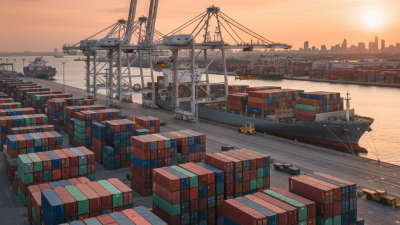
2026 Best Moving Containers for Global Buyers?
Choosing the best movers containers for 2026 requires more than comparing monthly prices. Global buyers must examine container quality, delivery coverage, loading access, insurance, storage terms, and return conditions. A steel box may look identical online, yet its floor strength, door seals, and ventilation can differ considerably.
UNCTAD’s Review of Maritime Transport 2024 confirms that shipping carries over 80% of global trade by volume. That figure shows why port congestion, fuel costs, and schedule changes can affect household moves. The World Bank’s Logistics Performance Index 2023 also highlights major differences in customs efficiency, infrastructure, and shipment reliability between countries. Therefore, a container provider with the lowest quote may not deliver the lowest final cost.
Lars Jensen, a recognized container-shipping analyst at Vespucci Maritime, has warned, “Container shipping is a market of cycles, not certainties.” His point matters for moving customers. A route can be stable in March and delayed in July. A quote can change after a port surcharge appears. This guide compares movers containers through a practical, global lens, including container dimensions, tracking, handling experience, and customer support. It also considers less visible details, such as whether a truck can reach a narrow driveway or whether rainwater can enter through worn door gaskets. No ranking is perfect. Regional service data can remain incomplete, and advertised delivery times may need closer questioning. Still, careful comparison can reduce unpleasant surprises for families, renters, and businesses planning international relocations in 2026.

What Are Moving Containers and How Do They Work?
Moving containers are secure, portable units used to store and transport household belongings. They are usually delivered to your home, allowing you to load items at your own pace. A trained crew may place the container on a driveway or a prepared area near the property. Some units remain on-site, while others move to a storage facility or shipping terminal.
The process is practical but not effortless. Pack heavy furniture low and place lighter boxes above it. Use blankets around glass, label each box by room, and leave a clear walkway inside the container. After loading, the container is collected and transported by road, rail, or sea. International movement requires accurate inventories, destination paperwork, and compliance with customs rules. Requirements vary by country. Wooden packaging may also need approved treatment marks. One mistake can cause delays, extra storage charges, or damaged goods. I have found that customers often underestimate loading time, especially when stairs or narrow gates are involved.
Tips: Measure the container before ordering. Check driveway access and ground strength. Photograph valuable items before packing. Keep passports, medicines, essential clothing, and important documents with you. Do not place fragile electronics against metal walls without insulation. Ask about insurance limits, delivery windows, weather protection, and responsibility during transfers. A container can simplify a move, but it does not remove planning. Leave space for inspection access when required. Be realistic. Overpacking creates pressure on doors and makes unloading unpleasant.
Which Moving Container Types Suit Global Relocations?
The right moving container depends on shipment size, route, and how much handling your belongings can tolerate. A full-container shipment suits a larger home or a family sending furniture, boxes, and bulky items together. The space is reserved for one shipment, which can simplify loading and reduce transfers. A 20-foot container may fit a modest household, while a 40-foot unit offers more room, but actual capacity depends on furniture shape and packing.
Smaller shipments may suit shared-container freight, where household goods travel alongside other customers’ cargo. It can cost less, though departure dates may be less flexible and delivery may take longer.
For a few rooms or delicate pieces, a lift van—a compact, sturdy wooden crate—can be easier to handle than a large steel container. Portable storage containers are convenient for local packing, but not every type is suitable for ocean transport.
Confirm international handling, weather protection, and the full route before choosing one.
Small details matter.
A sofa that fits through a doorway may still waste container space. Measure large items and estimate volume carefully; rough estimates are often wrong, and that is easy to overlook.
How to Compare International Container Costs and Transit Times
2026 Best Moving Containers for Global Buyers?
How to Compare International Container Costs and Transit Times
International container shopping is not just about finding the lowest advertised price. Compare the same shipment details across every quote: origin address, destination address, container size, packing volume, pickup date, and delivery method. A quote should clearly separate ocean freight, terminal handling, documentation, customs clearance, insurance, storage, and final delivery. If these items are bundled vaguely, the final invoice may change sharply.
Transit time also needs careful reading. Port-to-port estimates often exclude inland pickup, loading delays, customs processing, and destination delivery. Ask for the typical range, not only the fastest promise. In my experience, a route listed at 30 days may take 40 or more during peak seasons, weather disruptions, or port congestion. My early comparisons were too optimistic because I ignored local holidays and warehouse cut-off times. That mistake was expensive.
Tips: Request at least three itemized quotes. Confirm whether charges use actual or volumetric volume. Check the sailing frequency and the estimated arrival window. Ask who handles customs communication and what happens after a missed connection. Keep photos of packed items and a written inventory. Small details matter. A reliable provider should explain assumptions, exclusions, and possible delays in plain language, without pressuring you to book immediately.
2026 Best Moving Containers for Global Buyers? — How to Compare International Container Costs and Transit Times
Indicative port-to-port ocean freight planning ranges for common international moving routes.
Planning guide only, not a live quote or guaranteed 2026 rate. Freight budgets are broad estimates for the ocean leg and can change with booking date, port pair, carrier capacity, fuel and security surcharges, and season. They exclude packing, origin and destination handling, inland transport, customs duties, inspections, insurance, storage, and delivery. Transit times are typical port-to-port estimates; customs, congestion, transshipment, and inland delivery can add time. Container capacities are approximate and usable loading space may be lower.
What Features Matter in a Global Moving Container?
For global buyers, a moving container must handle long sea routes, road transfers, and changing weather. Start with the shell. A corrosion-resistant steel frame offers dependable protection during repeated handling. Weather-sealed doors help block rain, salt air, and dust. The floor should resist moisture and support household equipment without bending. Internal tie-down points also matter. They keep boxes, bicycles, and furniture from shifting during sudden braking.
Access can save hours. Wide doors make bulky sofas and appliances easier to load. Forklift pockets and reinforced corner fittings support safer lifting at ports and warehouses. Check the container’s usable dimensions, not only its external size. A small measurement error can leave a wardrobe outside the door. That happened to me once, and repacking was frustrating.
Security features should be practical, not decorative. A strong locking bar, tamper-evident seal, and clear container number create a useful chain of accountability. Basic tracking can show location changes, although devices may lose power or signal. Ask for inspection records, weight limits, ventilation details, and cleaning procedures. Reliable providers should explain these points in plain language. They should also offer accurate paperwork for transport partners and destination requirements. Do not assume every container suits every route. Port equipment, climate, and local handling conditions can expose weaknesses that look invisible in a showroom.
2026 Best Moving Containers for Global Buyers: What Features Matter in a Global Moving Container?
Container size is a key consideration for international moving. Standard 20-foot, 40-foot, and 40-foot high-cube containers offer approximately 33.2 m³, 67.7 m³, and 76.4 m³ of internal volume respectively. Buyers should also evaluate weather resistance, door security, ventilation, lifting compatibility, shipping documentation, and insurance coverage before selecting a moving container.