Top 10 Shipping Container Shipping Companies in China
China plays a central role in global shipping, connecting major ports with manufacturers, retailers, and overseas markets. For businesses comparing the top 10 shipping container shipping companies in China, the name alone is not enough. Service coverage, sailing frequency, equipment availability, tracking tools, and schedule reliability all matter. A low quote can look attractive. Delays can change the calculation.
As shipping historian Marc Levinson puts it in his book’s subtitle, “the shipping container made the world smaller and the world economy bigger.” That shift is visible at busy Chinese terminals, where cranes lift containers between ships, trucks, and rail lines. This guide compares leading providers by practical factors, including route options, cargo support, customer service, and digital visibility. It also distinguishes ocean carriers from freight forwarders, whose roles and offerings can differ. Details change. Verify current schedules and terms directly with each provider.
No ranking is perfect. Company performance may vary by route, season, and shipment size, while published service claims do not guarantee a particular outcome. The comparisons below offer a starting point, not a substitute for checking transit times, surcharges, and cargo requirements. A careful review can help shippers find a provider that fits their real needs.
How China's Container Shipping Industry Is Organized
China’s container shipping industry is a network of ocean carriers, port terminals, freight forwarders, and inland transport providers. These groups handle different stages of a shipment, so “shipping company” can mean more than the vessel operator. A carrier moves containers between ports; a forwarder coordinates bookings, documents, and connections. The distinction matters when comparing service offers.
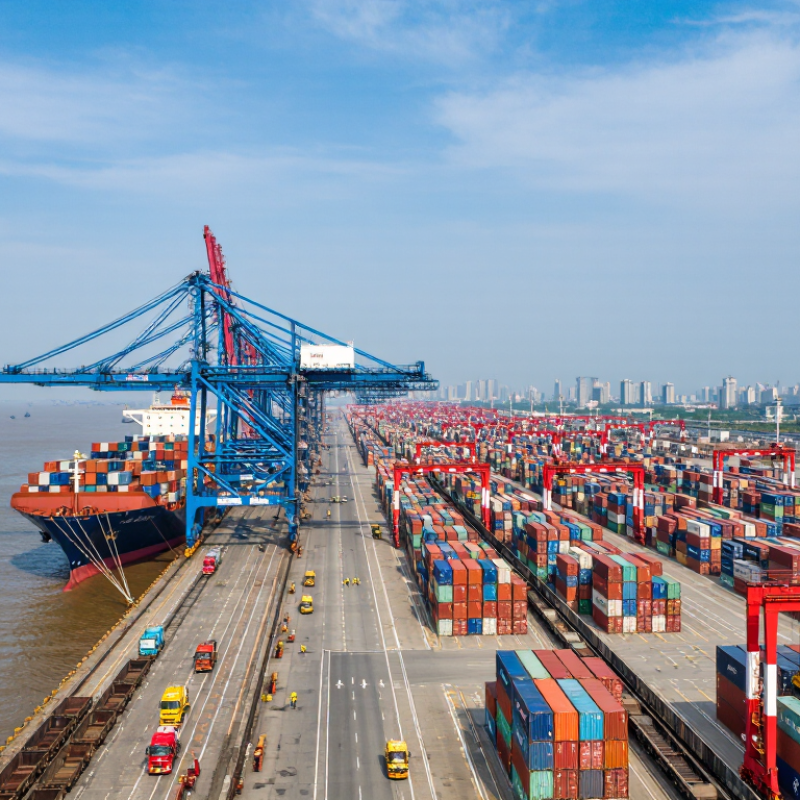
Along the coast, large ports connect international routes with regional feeder services. At a terminal, cranes lift containers between ships, yard stacks, and trucks. Inland, rail and road links carry cargo to factories, warehouses, and distribution centers. A delay at any transfer point can affect the whole journey. Schedules look neat on paper. Port conditions are less predictable.
A useful comparison of China-based container shipping companies should consider route coverage, sailing frequency, equipment availability, and connections beyond the port. Customer support and shipment visibility also matter, especially when cargo changes hands several times. Rankings can be misleading: published capacity does not show whether a particular route suits a buyer’s schedule or inland destination. Even reliable data has gaps. Check service details for the exact origin, destination, and container type before judging a carrier’s fit.
Criteria for Comparing Leading Shipping Companies
When comparing shipping companies in China, start with the route, not a headline rate.
Check whether the service covers your loading city, export port, destination port, and final delivery point. A low quote may exclude trucking, handling, or seasonal surcharges. Ask for a written breakdown. Small details matter.
Next, compare schedule reliability using recent, route-specific performance data. Ask how often departures change and how delays are communicated. Confirm container availability, equipment condition, and booking cut-off times; a missed cut-off can add days. Tracking should show meaningful milestones, not just “in transit.” Test the support process with a specific question before booking. Was the reply clear? Did it arrive promptly? Service quality can vary between routes and peak periods, so broad promises deserve careful checking.
Review claims handling and documentation support as well. Ask what evidence is needed for a damaged container or a missed service commitment, and who manages the case. Compare quotes on identical cargo details, dates, and service scope. A simple scorecard helps, though it cannot capture every port disruption or communication problem. No comparison is perfect. Record assumptions beside each rating, especially when performance figures are limited or difficult to verify.
Profiles of Ten Major Chinese Container Shipping Companies
China’s container-shipping sector includes operators with very different strengths. These ten profiles describe common capabilities, not a verified ranking. One focuses on frequent coastal departures. Another connects major ports with inland rail and river terminals. A third specializes in refrigerated cargo, where temperature records matter as much as sailing times. A fourth serves export-heavy manufacturing regions with regular Asia-bound routes.
A fifth operator emphasizes large vessels and long-distance services. A sixth offers flexible space for smaller exporters. A seventh coordinates port calls with warehouse handoffs. An eighth invests in digital booking and cargo tracking. Useful, but not flawless. A ninth concentrates on regional feeder routes, moving containers between smaller ports and major hubs. The tenth builds services around customer support and shipment visibility.
For buyers, the practical differences show up in details: cutoff times, equipment availability, transit schedules, and responses when weather disrupts a port. A polished online platform cannot replace clear communication. Nor does a broad route map guarantee the best fit for every shipment. Compare recent service records, confirm local handling arrangements, and ask how schedule changes are reported. Details vary by route. That deserves a closer look.
China's Container Shipping Landscape: Port Throughput Growth (2019–2023)
China's ports handled steadily more containers over this period, reaching 310.3 million TEUs in 2023. This national port-throughput measure provides context for the market in which Chinese container shipping companies operate; it is not a company-by-company ranking.
Source: China Ministry of Transport, annual statistical bulletins. TEU means twenty-foot equivalent unit.
Key Routes, Fleets, and Services of the Top Ten
China’s leading container-shipping companies connect major manufacturing hubs with markets across Asia, Europe, North America, the Middle East, and Latin America. Their services range from frequent intra-Asia sailings to long-haul transpacific and Asia–Europe routes. Fleet comparisons should consider vessel capacity, sailing frequency, and access to feeder ships, not just headline ship counts. Schedules can shift. UNCTAD’s Review of Maritime Transport 2024 reports that global maritime trade volumes grew 2.4% in 2023, a useful backdrop for understanding changing route demand.
Across the top ten, service differences often show up at the port level: direct calls may save days, while transshipment can widen port coverage. Larger vessels suit high-volume corridors, but smaller ships can reach secondary ports with tighter draft limits. Many operators also offer refrigerated-container handling, cargo tracking, and inland connections. Published schedules do not show every disruption, and fleet capacity alone cannot promise reliable transit times. That is worth remembering.
Tips: Compare the full port rotation, cutoff time, and estimated transit time for your shipment. Ask whether inland transport and container availability are included. Small details matter. Cross-check sailing information close to booking, since congestion and schedule changes can affect arrival dates.
How Shippers Can Evaluate Carrier Options
Choosing a container carrier in China is less about the lowest quote than whether its service fits your cargo, route, and timing. Provide the exact origin and destination ports, container size, cargo-ready date, and arrival window. Ask whether the quote includes inland trucking, terminal handling, documentation, and surcharges. Get each item in writing. Small omissions matter. A low ocean rate may not reflect the final shipping cost.
Compare sailing options for your specific week, then check transit-time ranges, transshipment points, and cut-off times. Ask how delays are reported and who handles claims or booking changes. Review recent service records where available, but treat averages carefully: one busy season can distort them. For sensitive or high-value cargo, confirm equipment availability and tracking updates before booking. Check payment terms, capacity commitments, and cancellation conditions, too. Use identical shipment details for every quote, or the comparison becomes misleading. A spreadsheet helps, though it cannot show how clearly a representative answers a difficult question. That deserves a second look.