2026 Best Sea Container Types for Global Buyers?
Choosing the right sea container in 2026 will require more than comparing prices. Global buyers must match container type, cargo characteristics, route conditions, and total operating cost. A standard 20-foot dry container may suit boxed machinery, while a 40-foot high-cube unit can reduce wasted vertical space for lightweight goods. Temperature-sensitive cargo may require a reefer. Oversized equipment may need an open-top or flat-rack design.
UNCTAD’s Review of Maritime Transport 2024 reported that global maritime trade reached about 12.3 billion tons in 2023. It also identified continued growth in containerized trade, despite route disruptions and capacity pressures. Drewry’s Container Forecaster has repeatedly highlighted equipment availability, leasing costs, and freight-rate volatility as important purchasing factors. These issues can change quickly. A low purchase price may hide higher inspection, repair, inland transport, or repositioning costs.
Lars Jensen, CEO of Vespucci Maritime, has warned, “Container shipping is a cyclical industry.” That observation matters for 2026 procurement. Buyers should examine steel condition, floor strength, CSC certification, insulation performance, and door-seal quality. A clean exterior is not enough. Moisture stains inside a container can signal future cargo damage. However, no single container type is best for every market. This guide compares practical options, but some recommendations remain route-dependent and deserve careful review.
ISO 668 Size Basics: 20ft, 40ft, and 40ft High-Cube Units
2026 Best Sea Container Types for Global Buyers?
ISO 668 Size Basics: 20ft, 40ft, and 40ft High-Cube Units
For global buyers, ISO 668 provides a reliable starting point for container dimensions. A standard 20ft container measures about 6.058 meters long and 2.438 meters wide externally. Its typical external height is 2.591 meters. It suits dense cargo, machinery, and smaller shipments. A 40ft container doubles the length to about 12.192 meters. However, it does not automatically double usable weight capacity. Payload depends on tare weight, cargo distribution, and transport regulations.
The 40ft High-Cube container keeps the same length and width as the standard 40ft unit. Its external height rises to approximately 2.896 meters. That extra 305 millimeters can help with tall cartons, furniture, or lightweight goods. Internal dimensions vary slightly between manufacturers and production years. Check the actual equipment specification before planning a tight fit. I have seen loading plans fail because buyers used external measurements only.
Tips: Confirm internal length, door opening, tare weight, and maximum payload. Measure the tallest packed item, including pallets and protective materials. Leave clearance above the cargo. Small errors matter. Also verify road-height limits at the destination, since a high-cube unit may create handling problems. A 20ft container can be more practical than a half-empty 40ft unit, even when its freight rate seems less attractive.
Dry Freight Containers: 33.2–76.4 m³ Capacity for General Cargo
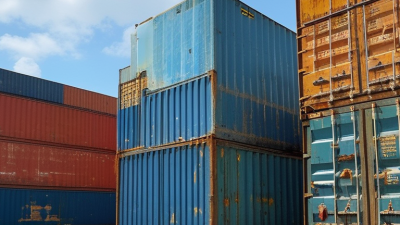
For global buyers in 2026, dry freight containers remain practical for general cargo. They provide enclosed, stackable space for cartons, pallets, furniture, and machinery. The right type depends on cargo volume, loading access, weight, and route conditions. The 20-foot dry container usually offers about 33.2 m³ of internal capacity. It suits dense cargo that reaches weight limits before filling the floor.
A standard 40-foot container provides roughly 67.7 m³. A 40-foot high-cube unit can reach approximately 76.4 m³. That extra height supports tall packaging, layered pallets, and irregular boxes.
More space does not always mean lower transport costs. Cargo weight, port equipment, and inland road limits still matter. In cargo planning, buyers sometimes choose high-cube capacity but waste space through poor pallet arrangements. Measure every load.
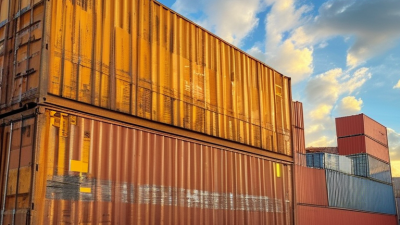
Before purchasing or leasing, inspect the floor, door seals, corner posts, and locking bars. Check internal length and width, not only listed capacity. A clean, dry interior helps protect general cargo from rain, dust, and condensation. Ventilation openings may support certain cargo plans, but they cannot replace moisture control. Specifications can vary slightly by production batch and repair history. That detail is easy to miss. Use inspection records, payload data, and route requirements before approving a container.
Reefer Containers: −30°C to +30°C Control for Temperature-Sensitive Goods
2026 Best Sea Container Types for Global Buyers?
Reefer containers support temperature-sensitive cargo across long ocean routes. Most units provide controlled settings from about −30°C to +30°C. This range suits frozen seafood, fresh produce, dairy products, medicines, and other sensitive goods. However, a reefer does not instantly cool warm cargo. The goods should be pre-cooled before loading. Otherwise, the machinery may struggle during the first hours at sea.
Reliable operation begins with a careful pre-trip inspection. Check the door gasket, drain, interior panels, power cable, and temperature sensors. Confirm the required setpoint with the cargo specification, not with guesswork. Leave enough space around the load for air circulation. Blocked airflow can create warm pockets, even when the display shows the correct temperature. I have seen good equipment perform poorly because cartons were packed too tightly. That detail is easy to miss.
Tips: Record the cargo temperature before loading and use an independent data logger. Choose a container with the right temperature range, ventilation mode, and humidity needs. Ask for maintenance records and a recent inspection report. Keep the setpoint stable unless the product expert advises a change. Small mistakes matter. Also, route delays and power interruptions deserve a practical backup plan. Temperature control is strong, but it is not magic.
2026 Best Sea Container Types for Global Buyers
Reefer Containers: −30°C to +30°C Control for Temperature-Sensitive Goods
The chart shows indicative transport temperature bands commonly used for temperature-sensitive cargo in refrigerated containers. Actual settings depend on the product specification, packaging, route, and regulatory requirements. Reefer containers generally support controlled temperatures from approximately −30°C to +30°C.
ISO Tank Containers: 20ft Frames Carrying Up to 26,000 Liters of Liquids
For global buyers, the 20-foot ISO tank container offers a practical liquid transport format. It fits standard intermodal routes, terminals, and lifting equipment. Many units carry up to 26,000 liters of approved liquids. The phrase “up to” matters. Actual capacity depends on liquid density, tank design, and gross weight limits. A denser liquid may reach the weight limit before the tank reaches its volume limit. The steel frame also protects the vessel during repeated handling. ITCO’s 2024 Global Tank Container Fleet Survey recorded 801,800 tanks worldwide, up from 738,000 in 2023. That growth reflects stronger demand for reusable bulk-liquid logistics.
UNCTAD’s Review of Maritime Transport 2024 reported 2.4% maritime trade growth in 2023 and projected 2.0% growth for 2024. Buyers should therefore assess route reliability, not only tank volume. Check insulation, heating capability, valve protection, internal finish, inspection records, and CSC certification. Equipment compatibility matters at both loading and discharge points. An experienced inspection should verify seals, frame condition, pressure-test dates, and documentation. Do not treat 26,000 liters as guaranteed payload. That assumption can distort freight calculations. Operational planning is rarely perfect; port delays, temperature changes, and density variations still affect usable capacity. A smaller fill may be the safer commercial choice.