10 Container Solutions Tips Every Global Buyer Needs

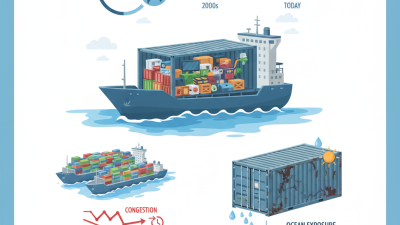
Global procurement depends on movement, timing, and evidence. More than 80% of global merchandise trade by volume travels by sea, according to UNCTAD’s Review of Maritime Transport. For buyers, one delayed container can affect factory schedules, retail launches, and customer trust. A container is not merely a steel box. It is a moving warehouse exposed to weather, port congestion, documentation errors, and changing freight costs.

The World Bank and S&P Global’s Container Port Performance Index 2023 shows significant differences in port efficiency worldwide. That difference can mean extra days between a vessel’s arrival and cargo release. Small details matter. A correct container specification, verified loading plan, and realistic buffer can prevent expensive surprises. These are practical lessons from international shipping operations, not abstract theory.

This guide, “10 Container Solutions Tips Every Global Buyer Needs,” focuses on decisions buyers can apply before cargo reaches the terminal. It covers container types, capacity planning, packaging, inspection, route selection, tracking, and supplier communication. UNCTAD’s data also reminds us that maritime trade remains vulnerable to geopolitical disruption and operational shocks. No checklist removes every risk. Some recommendations will need adjustment for temperature, product shape, season, or destination infrastructure. That is the uncomfortable part. A cheaper quote may become costly after demurrage, rehandling, or damage. Strong container solutions therefore combine reliable data, experienced partners, clear contracts, and regular review. Buyers should question assumptions, measure actual performance, and improve the process after every shipment.

10 Container Solutions Tips Every Global Buyer Needs

Define Your Cargo, Capacity, and Container Requirements

10 Container Solutions Tips Every Global Buyer Needs

Define Your Cargo, Capacity, and Container Requirements

A reliable container plan begins with the cargo, not the container. Record each product’s dimensions, weight, packaging type, and loading limits. Measure the longest item carefully. One extra centimeter can change the entire loading pattern.

In my experience, buyers often calculate volume but overlook weight distribution. Heavy cartons should sit low and near the container’s center. Fragile goods need separation, cushioning, and clear handling instructions. Leave practical space for doors, lashing, and inspection access. A packed diagram helps reveal wasted corners before loading day.

Choose container capacity from real measurements, not estimates. Compare usable internal dimensions with pallet footprints, crate shapes, and stacking limits. Check whether the cargo needs ventilation, temperature control, or extra securing points. Requirements must also match the delivery route and handling equipment. A port crane may lift the unit, but a small warehouse may not unload it easily.

Details matter most.

Ask suppliers for current packing data. Then verify it with a sample shipment. I once trusted a standard carton size that changed after production, creating avoidable empty space. That mistake was minor, but expensive across repeated orders. Keep a written specification, including gross weight, tolerances, moisture protection, and loading photos. Review it when the product, packaging, or destination changes.

Compare Container Types, Materials, and Specialized Features

Choosing a container starts with cargo behavior, not appearance. A standard dry container suits boxed goods, pallets, and equipment needing basic weather protection. Refrigerated units support temperature-sensitive cargo, but their power demand and set-point records require careful planning. Open-top designs help with tall machinery, while flat racks handle oversized loads with approved securing points. In my purchasing work, I have seen buyers select capacity first and regret ignoring loading methods. The right type reduces delays at cranes, warehouses, and border inspections.

Material affects lifespan, weight, and maintenance. Weathering steel offers strong structural performance and tolerates harsh handling. Aluminum can reduce tare weight, although repairs may require different workshop skills. Interior coatings matter when cargo releases moisture or mild chemicals. Check weld quality, door seals, floor condition, and corrosion around lower rails. Small defects matter. A clean inspection record is useful, but photographs should show corners, roof, locking bars, and underside. Specifications alone rarely reveal actual condition.

Specialized features should solve a measured problem. Insulation, ventilation, humidity control, ramps, partitions, and temperature sensors each add cost and maintenance. Ask whether the feature works across your routes and service partners. Sensor data is valuable only when calibration, battery life, and access are documented. Confirm payload, internal dimensions, lifting limits, and certification requirements before ordering. I would also request a trial inspection with the actual loading team. One overlooked step can undo a technically excellent choice. Some assumptions remain uncertain; seasonal weather and local handling practices can change performance. Recheck them before committing.

Verify Supplier Credentials, Product Quality, and Compliance

Global container buying starts with supplier verification, not a low quotation.

UNCTAD’s Review of Maritime Transport 2024 states that shipping carries over 80% of world merchandise trade by volume. One missing certificate can therefore disrupt several markets at once. Request legal registration, ownership details, factory address, insurance, and recent audit records. Check whether certificates match the actual production site, not only the trading office.

Then test the product, not just the paperwork. Ask for pre-production samples, material reports, dimensional checks, and batch traceability. For containerized cargo, inspect packaging strength, moisture protection, pallet stability, and seal records. ISO 9001 can indicate a quality system, but it does not guarantee every shipment. That distinction matters. A practical compliance file should also include applicable customs documents, safety data, labeling evidence, and verified gross mass records under SOLAS requirements. The International Maritime Organization requires accurate verified gross mass before container loading.

Do not rely on photographs alone. Use an independent inspection before dispatch, and compare random samples against the approved specification. Keep communication records and corrective-action deadlines. No checklist catches everything. I once treated a clean certificate as proof of reliable production; that was too optimistic. Recheck expired documents, changed materials, subcontracted processes, and unusually fast delivery promises. Small inconsistencies often appear before larger quality failures.

Calculate Total Costs, Shipping Routes, and Import Duties

Global container buying rarely fails because of the quoted product price. The surprise usually arrives later, through freight, handling fees, duties, storage, and inland delivery. Build a landed-cost sheet before confirming an order. Record the unit price, container size, cargo volume, gross weight, insurance, port charges, customs fees, duty rate, taxes, and final-mile transport. Use the correct tariff classification, not a convenient guess. A small classification error can distort the budget. Check current customs guidance and request written clarification when the product description is unclear. Keep invoices, packing lists, origin documents, and freight quotations together. This evidence supports cleaner declarations and faster reviews.

Compare shipping routes by total time and total cost, not distance alone. A shorter ocean route may involve expensive transshipment, congestion, or limited inland connections. Ask carriers for quoted validity, free storage days, demurrage terms, and likely schedule changes. Then model at least three scenarios: standard service, delayed arrival, and a higher-cost urgent option. Delays happen. Keep a buffer. Import duties differ by destination, material, origin, customs value, and trade rules. Never copy a duty percentage from an old shipment. Confirm it with a qualified customs professional or the relevant authority before payment. Also test currency changes and fuel surcharges in your spreadsheet. My own estimates have been wrong when I ignored terminal handling. That mistake was avoidable. Review every assumption with someone who manages receiving, customs, and warehouse capacity. A complete estimate should explain uncertainty, not hide it.

10 Container Solutions Tips Every Global Buyer Needs - Calculate Total Costs, Shipping Routes, and Import Duties

A practical planning table for comparing container capacity, logistics costs, transit factors, and import-duty exposure. Monetary examples are illustrative planning values in USD and should be replaced with current quotations and customs rulings.

Tip Decision Area Key Data Dimension Reference Data or Example Calculation or Control Method Buyer Action
1 Select the correct container size Internal volume and payload Standard reference
A typical 20-foot dry container provides approximately 33 m³ of internal volume. A typical 40-foot dry container provides approximately 67 m³. Actual payload limits depend on container construction, road regulations, and the carrier.
Required volume = unit volume × quantity × packaging factor.

Add approximately 5–10% planning space for irregular cartons, aisle gaps, and loading loss.
Compare both cubic volume and gross weight. Do not choose a 40-foot container solely because its volume is larger.
2 Calculate cargo utilization Cubic utilization and weight utilization If packaged cargo occupies 27 m³ inside a 33 m³ container, volume utilization is approximately 81.8%. Volume utilization = cargo volume ÷ usable container volume × 100.

Weight utilization = cargo gross weight ÷ permitted payload × 100.
Review packaging dimensions, pallet orientation, and carton stackability before booking extra containers.
3 Compare shipping routes Port pair, distance, transshipment, and sailing time Planning distances are commonly about 11,000 km between East Asia and the U.S. West Coast, about 20,000 km between East Asia and Northern Europe via the Suez route, and about 6,000 km between Southeast Asia and the Arabian Gulf. Actual routes vary by port and service. Door-to-door transit time = origin pickup + export handling + ocean transit + transshipment time + import handling + final delivery. Request at least two route options: the lowest-cost route and the fastest practical route. Check whether transshipment is included.
4 Separate freight from local charges Ocean freight, origin fees, destination fees, and delivery A quotation showing USD 2,000 ocean freight may exclude terminal handling, documentation, customs clearance, inspection, storage, chassis, and inland delivery. Logistics cost = ocean freight + origin charges + destination charges + customs service + inland transport + insurance + storage or demurrage. Require an itemized quote with currency, validity period, free-time allowance, and a clear Incoterm.
5 Build a landed-cost model Total delivered cost per unit Example: goods value USD 20,000 + international freight USD 2,000 + insurance USD 100 + duty USD 1,105 + non-recoverable local charges USD 1,200 = landed cost of USD 24,405. Landed cost = product cost + freight + insurance + import duty + taxes + clearance + inland delivery + other non-recoverable charges. Divide total landed cost by sellable units, not merely by the number of cartons or containers.
6 Verify the HS classification HS code, product description, material, and intended use The international Harmonized System uses six-digit headings globally, while many customs administrations add further national digits. Duty rates depend on the importing country and the verified classification. Potential duty = customs value × applicable ad valorem duty rate.

A specific duty is calculated separately, such as quantity × duty per unit.
Provide composition, function, technical specifications, and country of origin. Obtain an advance classification ruling where available.
7 Use the correct customs value Transaction value, freight, insurance, and valuation method Example customs value: goods price USD 20,000 + international freight USD 2,000 + insurance USD 100 = USD 22,100, where the destination customs regime uses a CIF-style valuation basis. Duty example at 5% = USD 22,100 × 5% = USD 1,105.

The exact valuation basis differs by jurisdiction and may include or exclude certain costs.
Confirm whether the destination calculates duty on FOB, CIF, transaction value, or another legally defined basis.
8 Check origin and trade preferences Country of origin, substantial transformation, and certificate requirements Preferential duty is not automatically available because goods ship from a particular country. Eligibility normally depends on the applicable trade agreement and product-specific rules of origin. Preferential duty saving = standard duty − preferential duty, subject to qualification and documentation. Confirm origin rules before production, retain supplier declarations, and verify whether a certificate or origin statement is required.
9 Budget taxes and compliance costs Import VAT or GST, excise, inspection, permits, and brokerage Import VAT or GST may be calculated on a base that includes customs value, duty, and certain transport or insurance costs. Recoverability depends on the importer’s tax status and local rules. Indicative import tax base = customs value + duty + legally includable costs.

Import tax = tax base × applicable tax rate.
Separate recoverable tax from permanent cost and check product-specific permits, labeling, safety, and inspection requirements.
10 Control time-related container charges Free time, demurrage, detention, storage, and delivery appointments A shipment with only a few free days can incur additional charges if customs clearance, inspection, terminal release, or trucking is delayed. The actual amount is defined by the applicable tariff. Exposure estimate = daily charge × chargeable days × number of containers.

Chargeable days = actual equipment or terminal days − agreed free days.
Confirm free time in writing, pre-clear documents, monitor arrival notices, and schedule customs and trucking before vessel arrival.
Planning note: Container dimensions, payload limits, transit times, freight rates, duty rates, taxes, and local charges vary by equipment type, route, season, customs jurisdiction, product classification, and contract terms. Use the table as a structured comparison framework and verify all figures with current carrier, customs, insurer, and logistics-provider documentation.

Plan Inspections, Documentation, Delivery, and Long-Term Support

Plan Inspections, Documentation, Delivery, and Long-Term Support

Tip 1: Build an inspection plan before production begins. Define dimensions, materials, load limits, surface quality, and testing methods. Ask for dated photos, measurement records, and corrective-action notes. A pre-shipment inspection should check the actual units, not only a sample report. I have seen small defects become expensive delays when inspection criteria stayed vague. Sometimes, a checklist still misses the practical issue.

Tip 2: Treat documentation as part of the product. Request packing lists, drawings, test results, maintenance instructions, and serial references in one controlled file. Confirm that quantities match the invoice and shipping records. Use clear file names and revision dates. Keep translated instructions available for warehouse and installation teams. Do not assume every document is correct. One unchecked measurement can affect unloading equipment and site preparation.

Tip 3: Plan delivery beyond the port. Confirm container dimensions, unloading access, lifting points, delivery windows, and local site restrictions. Share contact details among the buyer, carrier, inspector, and receiving team. Build time for customs review and weather-related disruption without making unrealistic promises. After delivery, schedule a condition check within twenty-four hours. Record dents, missing parts, and moisture immediately. Long-term support should include response times, spare-part guidance, and maintenance training. A useful support process also welcomes uncomfortable feedback. That is where the next improvement often begins.

10 Container Solutions Tips Every Global Buyer Needs

Recommended operational focus across inspection, documentation, delivery, and long-term support.

The chart highlights ten practical control points that help global buyers reduce shipment delays, prevent documentation errors, verify container condition, and maintain reliable support after delivery.

Scroll to Top